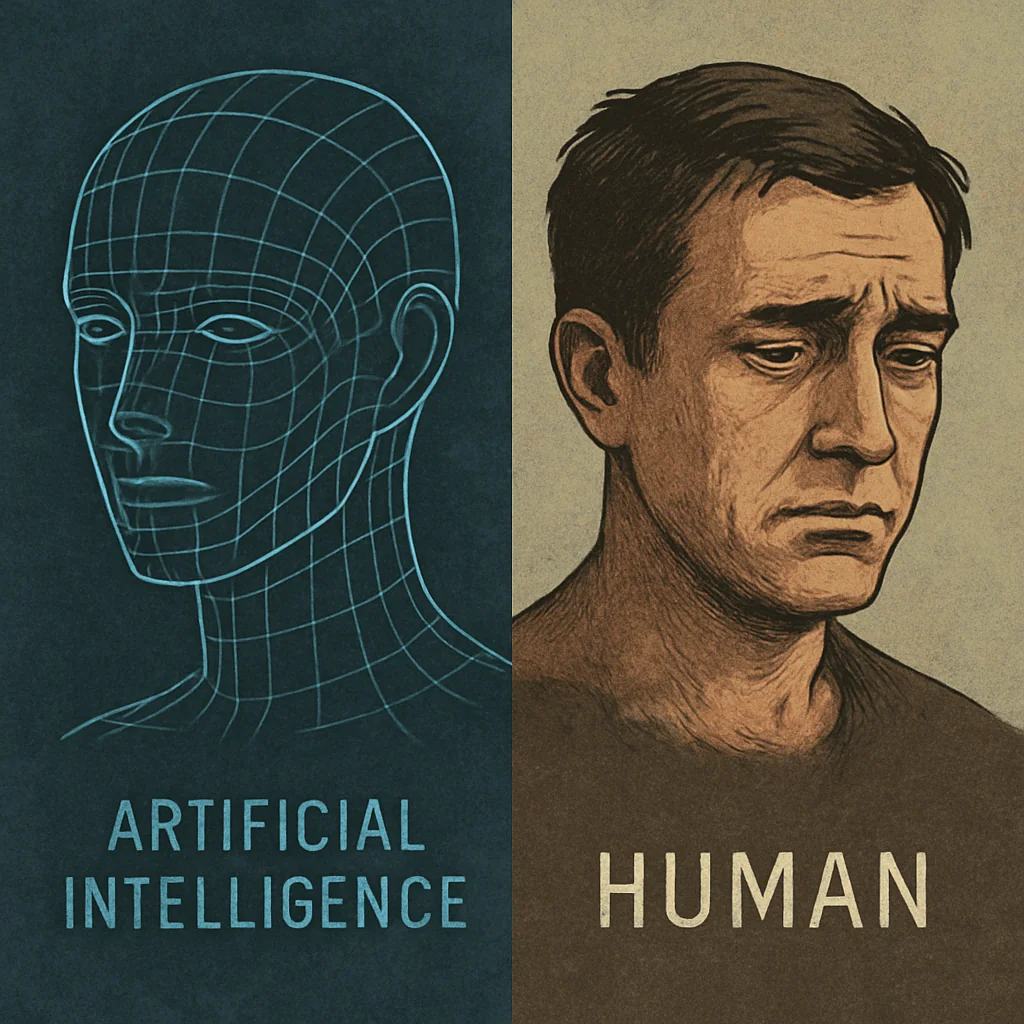
Artificial intelligence tools bring serious speed and convenience to software development processes. Generating code, fixing errors or creating technical drafts can now be done in seconds rather than minutes. However, this brilliant efficiency points to an invisible but critical loss of the human mind: deactivation of the responsibility of thinking. The discussions that we frequently encounter on the internet today, such as “AI now writes the software from start to finish”, “No one knows how to create projects”, “Software developers will be unemployed because of AI”, are exactly the reflection of this concern.
The Price of Efficiency: When Thinking Disengages
When used correctly, artificial intelligence is a powerful tool that reduces developer workload, speeds up work and automates routines. The problem is that AI is being placed in the role of “engineer” rather than a tool. When the requirements are not defined, the architecture is not considered why it should be the way it is, the context is not conveyed, and the model is consulted with missing parameters, AI fills in the gaps with its predictions. These predictions, which seem logical on the surface, turn into technical decay in the long run and produce projects that work in the short term and collapse as they grow.
Human Stops, AI Makes Predictions
When a person sees incomplete information, he stops, questions, establishes context and starts to think. AI does not question uncertainty; It only produces the most likely option. Therefore, it is not surprising that he proposes a JSON solution when the data is CSV, designs a REST API for an event-driven scenario, or fills the authentication with his own fiction. These predictions, which can be tolerated in small projects, translate directly into architectural disruption in enterprise systems; Because even every right step taken on the wrong foundation will work wrong over time.
Mental Breakdown is Real
The deeper problem, beyond the technical risks, is the weakening of the human mind. MIT’s research on EEG measurements shows that the brain activity of participants who produced text with the help of artificial intelligence decreased by 55%. Critical thinking reflexes weaken, memory processes deteriorate, the capacity to produce original content disappears, and people become lazier with each new task. The developer who accepts AI suggestions without questioning becomes unable to think of context over time; A professional profile emerges who cannot explain why the design in the project is the way it is, cannot foresee the consequences of decisions, and cannot weigh the long-term effects.
The Price of the Monolith by Estimate
It is not difficult to see this picture in a concrete scenario. When a team designs a service that processes customer data, they get help from AI without clarifying the requirements. Due to missing parameters, the model proposes a monolithic structure and the team includes it in the project without questioning. As the system grows, traffic problems, data inconsistencies, and constantly broken pipelines arise. No one can answer the question “Why was the architecture chosen this way?” Because the decision belongs to the model’s prediction, not to the human. When a person does not think, he cannot think of a project.
Two Ends of the Same Fear
The reason for the sharpening of the discussions on the internet is clear: While a group attributes more power to AI, saying that it can create projects without touching it; The other group defends the value of engineering by explaining that it will inevitably collapse. These two extremes are actually different faces of one common fear: “What if AI really takes our jobs?” If human thinking skills, analysis processes, design decisions and context responsibility are completely transferred to AI, yes; AI takes away that person’s job. Because the person makes himself dysfunctional. But if it uses the enormous capacity of the human brain, does not abandon the task of thinking and turns AI into a tool of action, not thinking, artificial intelligence cannot replace it. AI cannot think; it only implements generated ideas.
Same Difference in Poetry and Code
This difference can be seen even through a poem. The poetry produced by artificial intelligence is technically correct; Its rhythm, structure and word choice are on point:
Gökyüzü sessizce akarken gecenin koynuna,
Yıldızlar birer birer düşer zamanın yollarına.
Rüzgâr hafifçe okşar uyuyan şehrin yüzünü,
Her şey düzenli, sakin; tamamlanmış bir cümle gibi.
```But there is no inner voice in these verses. The source of the emotion, the trace of the experience, and the weight of the break are not felt. However, human existence makes itself felt immediately in Orhan Veli's verses:
Handan, hamamdan geçtik, Gün ışığında hissemize razıydık; Saadetinden geçtik, Ümidine razıydık; Hiçbirini bulamadık; Kendimize hüzünler icat ettik, Avunamadık Yoksa biz… Bu dünyadan değil miydik? ```
This is exactly what is missing in everything AI produces: the voice of experience. The same deficiency applies to software. AI can write code, but it doesn’t know why it wrote it that way, it doesn’t understand the context of the scenario, it can’t evaluate the long-term impact of the decision, it can’t predict how the modules will evolve. That’s why artificial intelligence produces but does not think; Human beings think and create meaning. If one stops thinking, technology will not produce, it will only accumulate garbage.
Correct Role Definition: AI Should Be the Agent of Action
The conclusion is clear: AI must be used, but its role must be defined correctly. Artificial intelligence should not be a replacement for thinking, but an accelerator of the work to be done after thinking. Disabling the human mind means the collapse of both the individual and the projects. Teams that abdicate responsibility for thinking are left with only the debris of predicted decisions, even if they use the most polished model.
References