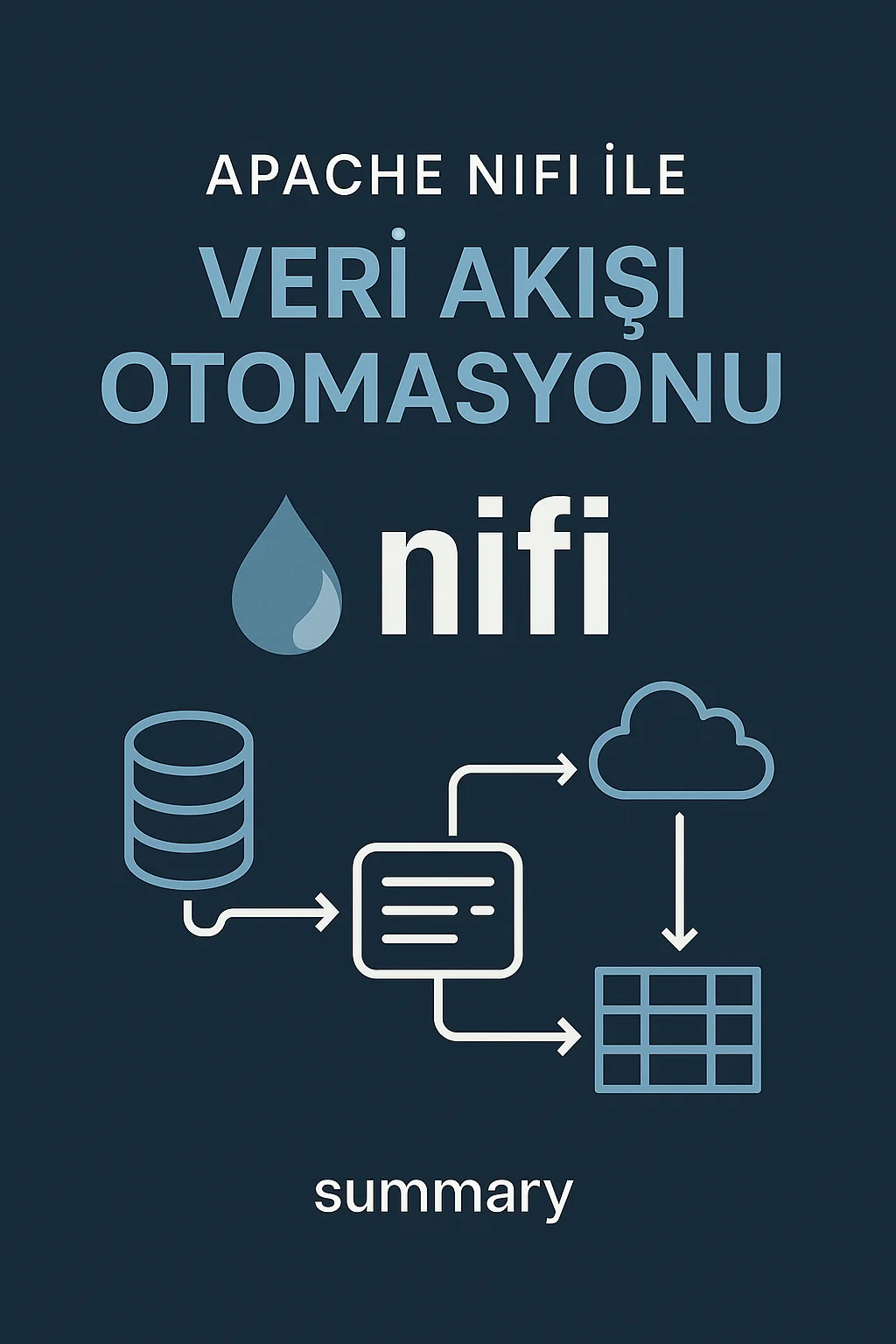
Apache NiFi is a powerful data flow automation platform developed to automatically collect, transform and transfer data from different sources to target systems. Thanks to its visual design interface, it makes it possible to create complex data lines without writing code.
🔍 What is NiFi and Why is it Used?
NiFi stands out with its ability to manage the following transactions end-to-end:
- Reading from different data sources (Kafka, HTTP, FTP, etc.)
- Data conversion (cleaning, enrichment, format change)
- Routing and transfer to destination (S3, PostgreSQL, API, MinIO)
- Real-time monitoring (Provenance, Bulletin Board)
In structures where dispersed data sources are collected; NiFi provides great convenience for teams dealing with inconsistent formats and requiring traceability.
📊 Solution Provided by NiFi
Typical data architecture issues:
- Resources are scattered
- Inconsistency of data formats
- Difficulty establishing a transparent and secure data pipeline
NiFi solves these problems with a visual drag-and-drop based flow model**.
🚀 Sample Scenario: Automation of IoT Data Pipes
JSON messages from IoT devices first reach Kafka and then NiFi. NiFi processes this data and saves it to PostgreSQL.
Flow Steps:
- ConsumeKafkaRecord_2_0 → Receiving JSON messages
- Flattening fields in UpdateRecord →
data - ExecuteScript → SHA256 signing and trace enrichment
- PutS3Object → Save file to MinIO
- PutDatabaseRecord → Writing to PostgreSQL
Docker Compose Example
db:
  image: postgres:15
  environment:
    POSTGRES_DB: nifi_demo
    POSTGRES_USER: nifi
    POSTGRES_PASSWORD: nifi123
  ports:
    - "5432:5432"
  volumes:
    - ./pgdata:/var/lib/postgresql/data

nifi:
  image: apache/nifi:2.5.0
  ports:
    - "8080:8080"
  environment:
    NIFI_WEB_HTTP_PORT: 8080
  volumes:
    - ./nifi_conf:/opt/nifi/nifi-current/conf
  hostname: nifi.fmarslan.com
📈 Performance and Security
NiFi’s strengths are also areas that need careful management.
- Sensitive data can be encrypted with EncryptContent
- Provenance records who made all transactions and when
- TLS must be mandatory when using Site-to-Site
- backpressure limits must be set for FlowFile queues
⚠️ Experience Based Alerts
Although NiFi is frequently used in IoT scenarios; ETL is also effective in areas as diverse as data synchronization, API-to-API flows, and log processing.
🧠 Design Principles
- Complex flows with many branches make management difficult.
- NiFi is an orchestration tool; It is not a business logic engine.
- Heavy processing and complex calculations should be done in separate microservices, NiFi should communicate with these services.
-
In production environments, the following topics should be considered:
- Backpressure configuration
- Provenance rotation
- CPU, RAM limits
- Cluster structure (load balancing, failover)
🧪 Performance Rating
NiFi is Java based and runs on JVM. Therefore, memory usage can rise rapidly in large data streams.
💡 Tip: Keep FlowFile content as small as possible. Instead of moving big data between processors, route it to external storage like MinIO.
🤖 Alternatives
| Vehicle | License | Note |
|---|---|---|
| NiFi | Apache 2.0 | Visual drag-and-drop flow design |
| Talend | Commercial | Enterprise ETL |
| StreamSets | Freemium | UI-focused data pipeline management |
| Airbyte | MIT | Modern, connector-based |
✨ Result
In fast data producing systems such as NiFi and IoT; It offers an ideal solution to schematize data, make it traceable, and process and route it securely. It’s a highly effective tool for teams that want to build powerful data pipelines without writing code.